
What Is an ECG Machine?


An ECG machine is a medical device that records the electrical activity of the heart. Also known as an EKG machine or electrocardiograph, it detects tiny electrical signals produced by the heart and converts them into a visual waveform called an electrocardiogram (ECG).
An ECG test is one of the most common non-invasive cardiovascular examinations. It can provide information about heart rate, heart rhythm, electrical conduction, and changes that may be associated with certain cardiac conditions. ECG machines are widely used in hospitals, clinics, emergency departments, ambulances, cardiac centers, and pre-operative examinations.
But how does an ECG machine work, and what should healthcare providers consider when choosing an ECG system?
How Does an ECG Machine Work?
The heart has its own electrical conduction system. Each heartbeat begins with an electrical impulse that travels through the heart and triggers the atria and ventricles to contract.
An electrocardiograph detects these electrical signals through ECG electrodes placed on the patient's skin. The device amplifies and processes the signals before displaying them as an ECG waveform on a screen or printing them on paper.
The resulting ECG recording allows healthcare professionals to evaluate the electrical activity of the heart.
An ECG does not directly measure the mechanical force of the heartbeat. Instead, it records the electrical activity responsible for coordinating each heartbeat.
This information can help clinicians evaluate heart rhythm, heart rate, conduction abnormalities, and other changes that may require further investigation
What Does an ECG Machine Measure?
Basic Rhythm Core
- Heart rate — Beats per minute
- Heart rhythm — Regularity of heartbeats
- Electrical conduction patterns
- Rhythm abnormalities
Waveform Components Waveforms
- P wave — Atrial depolarization
- QRS complex — Ventricular depolarization
- T wave — Ventricular repolarization
Intervals & Segments Intervals
- PR interval
- QT interval
- ST segment
🔍 Clinical Interpretation
The P wave represents atrial depolarization, the QRS complex represents ventricular depolarization, and the T wave represents ventricular repolarization.
📌 Need a reliable 12-lead ECG device?
View Product →What Is a 12-Lead ECG?
A 12-lead ECG is one of the most commonly used diagnostic ECG configurations.
A standard 12-lead electrocardiogram uses 10 electrodes to create 12 different electrical views of the heart. These leads allow clinicians to examine cardiac electrical activity from different directions.
The 12 leads include:
- I, II and III
- aVR, aVL and aVF
- V1, V2, V3, V4, V5 and V6
Each lead provides different information about the heart.
A 12-lead ECG is commonly used in emergency departments, cardiology departments, hospitals, outpatient clinics, and pre-operative assessments.
For healthcare facilities looking for professional diagnostic equipment, E-JAY Medical offers different ECG configurations, including the ECG 6C system for multi-channel clinical applications.
Types of ECG Machines
Different healthcare environments require different types of ECG machines.
Resting ECG Machine
A resting ECG records the patient's heart electrical activity while the patient remains still. It is commonly used for routine examinations, health screening, and cardiac assessment.
Portable ECG Machine
A portable ECG machine is designed for situations where mobility is important. It can be used in clinics, ambulances, bedside examinations, emergency care, and smaller healthcare facilities.
Portable systems can also be useful for medical teams that need to perform an ECG test in different locations.
Multi-Channel ECG Machine
A multi-channel ECG machine can acquire several ECG leads simultaneously. This can improve clinical workflow and make it easier to obtain a complete ECG recording.
The PE-1804A ECG machine is another option for healthcare facilities requiring professional ECG recording capabilities.
12-Channel ECG Machine
A 12-channel ECG machine is designed for comprehensive cardiac assessment and efficient clinical workflow.
The ECG 12H provides a solution for facilities requiring multi-lead ECG acquisition and professional electrocardiogram recording.
What Is an ECG Machine Used For?
The primary purpose of an ECG machine is to record the heart's electrical activity and provide critical data that supports clinical evaluation. Below are the key applications across diagnostic, emergency, and monitoring settings.
Cardiac Diagnosis
Detect structural or functional abnormalities of the heart.
Arrhythmia Evaluation
Identify irregular heart rhythms, including tachycardia and bradycardia.
Chest Pain Assessment
Evaluate potential cardiac causes of chest discomfort or pressure.
Heart Rhythm & Rate
Analyze the regularity of heartbeats and measure beats per minute.
Emergency Cardiac Evaluation
Rapid assessment of cardiac function in critical or trauma settings.
Pre-Operative Examinations
Ensure cardiac fitness and identify risks before surgical procedures.
Routine Cardiac Screening
Regular check-ups for patients with risk factors or family history.
Chronic Condition Monitoring
Track disease progression in patients with known heart conditions.
Follow-Up Examinations
Evaluate the effectiveness of treatments or surgical interventions.
ECG testing can also help clinicians identify patterns associated with conditions such as atrial fibrillation, conduction abnormalities, and other forms of arrhythmia.
In emergency medicine, ECG findings may also provide important clues regarding ST-segment elevation, myocardial ischemia, or suspected STEMI. However, an ECG should not be interpreted in isolation. Clinical symptoms and other diagnostic tests remain important.
How to Use an ECG Machine
Correct ECG electrode placement is essential for obtaining an accurate recording.
Before performing an ECG test, healthcare staff should generally:
- Explain the procedure to the patient.
- Ask the patient to remain relaxed and still.
- Prepare the skin and ensure good electrode contact.
- Position the ECG electrodes correctly.
- Connect the ECG cables.
- Select the appropriate recording mode.
- Start the ECG recording.
- Check the waveform for artifacts or interference.
- Save or print the ECG result.
Incorrect electrode placement can change the appearance of the ECG waveform and potentially make interpretation more difficult.
What Are ECG Artifacts?
ECG artifacts are unwanted signals that can interfere with an ECG recording.
- Common causes include:
- Patient movement
- Muscle tremors
- Loose electrodes
- Poor skin contact
- Incorrect electrode placement
- Electrical interference
- Cable movement
For this reason, proper patient preparation and electrode placement are important parts of obtaining a high-quality electrocardiogram.
ECG Machine and Digital ECG Transmission
Modern ECG machines increasingly support digital data storage and transmission.
A digital ECG can be transferred to electronic medical records or shared with other healthcare professionals. This can be particularly useful in emergency and pre-hospital environments.
For example, an ambulance team may perform a 12-lead ECG before the patient arrives at the hospital. The ECG data can then be reviewed by a cardiac specialist, helping the medical team prepare for the patient's arrival.
This type of ECG data transmission can improve communication between emergency medical teams and hospitals.
ECG Machine vs ECG Monitor
An ECG machine and an ECG monitor are related but serve different purposes.
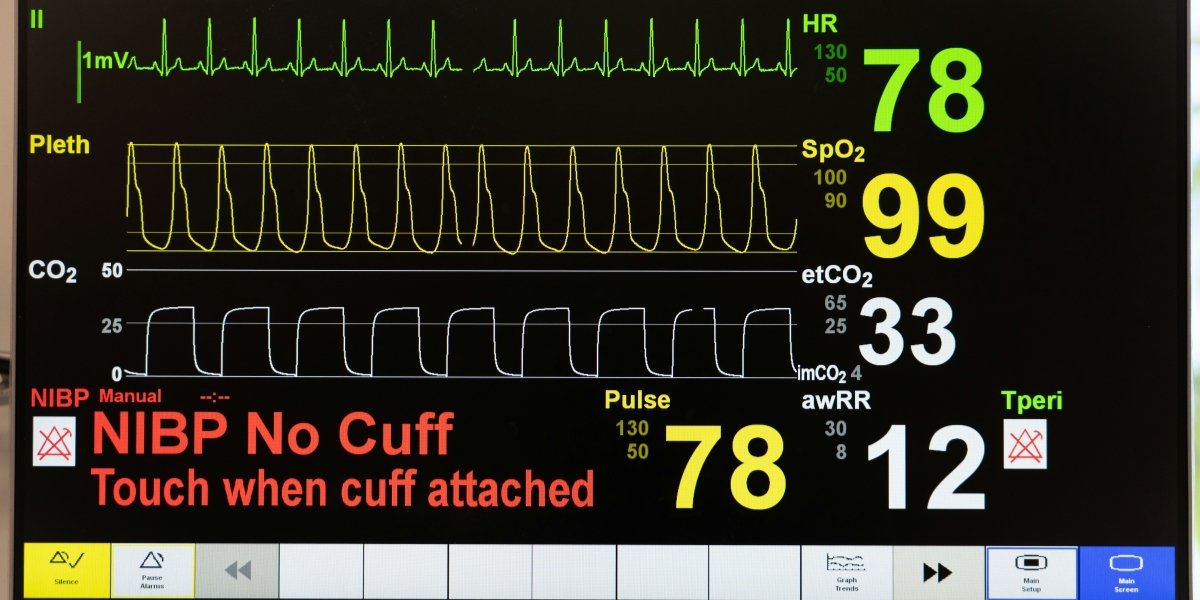
An ECG machine is generally designed to obtain a diagnostic ECG recording, often using multiple leads. An ECG monitor is commonly designed for continuous or real-time monitoring of parameters such as heart rate and heart rhythm.
Hospitals may use both systems depending on their clinical requirements.
What Should You Consider When Buying an ECG Machine?
When choosing an ECG machine, hospitals, clinics, and medical equipment distributors should evaluate more than the initial purchase price.
For medical equipment distributors, supplier reliability, product documentation, warranty, spare parts availability, and after-sales service are also important considerations.
Number of Channels
Single-channel, 3-channel, 6-channel, or 12-channel — choose based on your clinical needs and diagnostic requirements.
12-Lead ECG Capability
Standard 12-lead ECG provides comprehensive views of cardiac activity, essential for accurate diagnosis.
ECG Recording Quality
High-quality signal acquisition with noise filtering ensures clear, artifact-free waveforms for reliable interpretation.
Display & User Interface
A clear, intuitive display with user-friendly controls improves workflow and reduces operator error.
Printing Capability
Built-in thermal or digital printers allow instant hard-copy ECG reports for patient records and referrals.
Data Storage
Internal memory or external storage options for archiving patient data and enabling trend analysis over time.
Digital Connectivity
HL7, DICOM, or USB/Bluetooth connectivity for seamless integration with HIS/EMR systems.
Portability
Compact, lightweight designs with carrying handles or wheels for easy transport between departments.
Battery Operation
Long-lasting rechargeable batteries ensure uninterrupted use during transport or in areas with limited power outlets.
Electrode Compatibility
Ensure the machine supports standard ECG electrodes and patient cables for easy replacement and maintenance.
Ease of Operation
Simple setup, one-touch recording, and automated measurements reduce training time and improve efficiency.
Maintenance & Technical Support
Regular calibration, spare parts availability, and responsive after-sales support are critical for long-term reliability.
Frequently Asked Questions
What is an ECG machine used for?
How much does an ECG machine cost?
How to operate an ECG machine?
How to read an ECG machine?
Conclusion
An ECG machine, also called an EKG machine or electrocardiograph, is an essential medical device for recording the heart's electrical activity.
From a compact portable ECG machine to a professional 12-lead ECG or multi-channel system, different configurations are available for hospitals, clinics, emergency departments, ambulances, and cardiac care facilities.
A high-quality ECG system should provide reliable ECG recording, clear ECG waveforms, convenient operation, and appropriate connectivity for modern healthcare workflows.
When purchasing an ECG system, healthcare providers should consider the number of channels, clinical application, recording quality, portability, data management, maintenance, and supplier support.
E-JAY Medical provides a range of professional ECG solutions for hospitals, clinics, healthcare institutions, and medical equipment distributors looking for reliable ECG machines, EKG machines, and cardiovascular diagnostic equipment.